How Can a Machine Think?
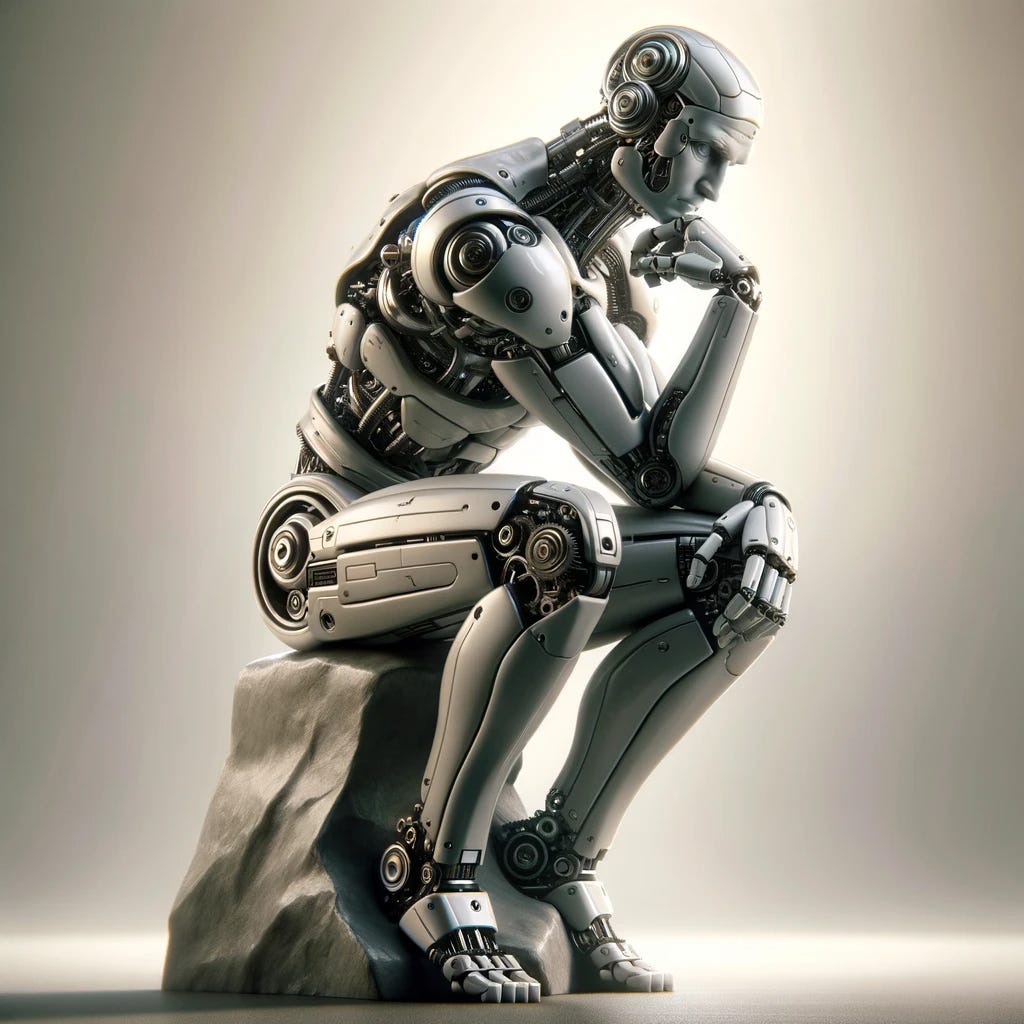
The idea of a machine that can think has fascinated people for decades. From science fiction movies to today's AI-powered assistants, the question remains the same: Can machines really think, or are they just following instructions?
What Does It Mean to "Think"?
Before answering whether a machine can think, we first need to define what thinking actually is. Humans think by learning from experiences, solving problems, making decisions, and sometimes even imagining things that do not exist.
Machines, however, do not have emotions, consciousness, or personal experiences. Instead, they process information using algorithms, mathematical models, and large amounts of data. Their "thinking" is based on recognizing patterns and making predictions rather than understanding the world in the same way humans do.
How Artificial Intelligence Works
Modern artificial intelligence (AI) relies on machine learning and deep learning. Instead of being programmed with every possible answer, AI systems learn from examples.
For example, if an AI model is trained on thousands of pictures of cats and dogs, it gradually learns the visual differences between them. When shown a new image, it can predict whether it is looking at a cat or a dog with impressive accuracy.
Large Language Models (LLMs), such as those behind modern AI chatbots, work similarly. They analyze enormous amounts of text and learn relationships between words, sentences, and ideas. When a user asks a question, the model predicts the most appropriate response based on its training.
Does AI Actually Think?
This is where opinions differ.
Some researchers argue that AI does not truly think because it lacks consciousness, emotions, self-awareness, and genuine understanding. According to this view, AI simply performs complex calculations at incredible speed.
Others believe that thinking does not necessarily require human consciousness. If a machine can solve problems, learn from experience, adapt to new situations, and communicate effectively, it may represent a different form of intelligence.
The answer ultimately depends on how we define intelligence itself.
The Strengths of Machine Intelligence
Machines have several advantages over humans in specific tasks:
- They can analyze massive amounts of data in seconds.
- They never get tired while performing repetitive tasks.
- They can identify patterns that humans might overlook.
- They continuously improve as they are trained with more data.
These capabilities make AI valuable in healthcare, finance, education, transportation, and scientific research.
The Limitations
Despite impressive progress, AI still has important limitations.
Machines do not understand emotions the way humans do. They cannot experience happiness, sadness, curiosity, or empathy. They also rely heavily on the quality of the data they are trained on. If the training data contains mistakes or biases, the AI can produce inaccurate or unfair results.
Furthermore, AI lacks common sense in many everyday situations. A machine may generate a convincing answer while still misunderstanding the real context of a question.
The Future of Thinking Machines
Artificial intelligence is advancing rapidly. New models are becoming better at reasoning, generating creative content, writing code, and assisting with complex tasks. However, today's AI is still fundamentally different from the human mind.
Rather than replacing human intelligence, AI is increasingly becoming a powerful tool that enhances our abilities. It can help us work faster, discover new ideas, and solve challenging problems, but human creativity, judgment, ethics, and emotional understanding remain essential.
Final Thoughts
So, how can a machine think?
The answer is that machines do not think exactly like humans. Instead, they process information, recognize patterns, and make predictions using sophisticated algorithms and vast amounts of data. While this form of intelligence is different from human thinking, it has already transformed the way we live and work.
As AI continues to evolve, the question may no longer be whether machines can think, but how we choose to work alongside them.